
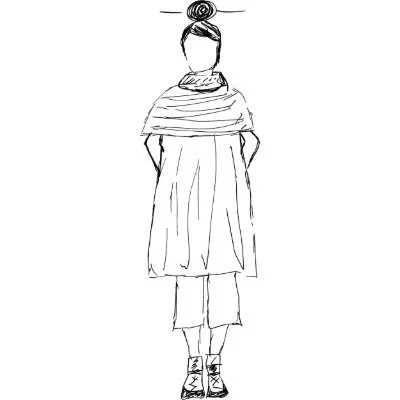
If you're getting ready to work with a patternmaker for the first time, you probably have questions. What should I bring? How many samples will this take? What exactly will my factory get? In this post, I'll walk you through how I work with natural-fiber brands, from first idea to factory-ready tech pack, and why that process matters more now than ever.
How working together goes
Discovery call. You tell me about your brand, your customer, your fabrics and your timeline. I ask about your factory, your budget and what this first style needs to do.
Sketches and technical flats. I turn your inspiration and rough sketches into clean technical flats, with versions to compare when a detail is still open.
Patterns drafted and fitted in CLO3D. I draft your patterns in CLO3D and fit them on an avatar built to reflect your target customer. You see how the garment hangs, where it pulls and how the fabric drapes before anyone cuts a physical sample. Most fit questions get solved on screen, which means fewer rounds of physical samples.
Fit sample and revisions. When your first physical sample comes back, I review it with you, write clear fit notes, and update the pattern and specs.
Factory-ready tech pack. You get a complete tech pack: technical flats, a bill of materials, points of measure, construction callouts and measurement specs.
Grading and production patterns. Once fit is approved, I grade your size range and prepare production patterns.
Factory handoff. I stay available to answer your factory's questions about the tech pack, so your design intent doesn't get lost in translation.
Why natural fibers need a careful tech pack
Natural fibers are beautiful to work with, and they behave differently from synthetics. Linen and hemp can shrink after washing. Wool knits stretch and need to recover. Cotton gauze drapes nothing like cotton twill. If your tech pack doesn't account for that, it shows up as fit problems in sampling.
A tech pack built for natural fibers spells out:
Fiber content and fabric weight, for your bill of materials and your care label
Expected shrinkage, and whether fabric should be washed before cutting
Seams and finishes suited to the fabric's drape and fraying
Measurement tolerances that are realistic for the fabric
New to tech packs? Start with What Is a Tech Pack and Why Every Designer Needs One, then dig into the bill of materials and points of measure.
Why this matters more now
Sustainability used to be a choice brands made on their own. It is quickly becoming a rule. Three changes are worth knowing about:
| Rule | What it means for your brand | Key date |
|---|---|---|
| EU textile EPR (revised Waste Framework Directive) | Brands selling clothing and footwear in the EU will pay fees toward collection and recycling. Fees are eco-modulated: products that are harder to recycle pay more. | Schemes in every EU country by April 17, 2028 |
| California Responsible Textile Recovery Act (SB 707) | Brands selling apparel and textiles in California must join a stewardship organization that funds collection, repair, reuse and recycling. | Registration was due July 1, 2026; full compliance by July 1, 2030 at the latest |
| EU Digital Product Passport for apparel (Ecodesign Regulation) | Garments sold in the EU will need a digital passport covering fiber composition, durability, care instructions and more. | Final rules expected by late 2027 |
Every one of these depends on the same thing: accurate information about what your garment is made of and how it's built. That information starts in your tech pack. A clear bill of materials, with fiber content, trims and suppliers, plus construction details that support durability and repair, sets you up for whatever the rules ask next.
I'm not a lawyer, so check how each rule applies to your brand's size and where you sell.
Fewer samples, less waste
Every extra sample round costs fabric, shipping and weeks on your calendar. Fitting in CLO3D first, then sending your factory a complete tech pack, is the most direct way I know to cut those rounds. It also means the garments that reach your customer fit well, so they get worn and kept instead of returned or thrown away.
Ready to start?
If you have a design you want to bring to life, book a discovery call. I'd love to hear about it and help you make garments that are made to matter, from first sketch to final wear.